

What Is Muay Thai? A Beginner’s Guide to the Art of Eight Limbs
Muay Thai is one of the most effective, and most misunderstood, martial arts in the world. If you’ve seen the knees, elbows, and roundhouse kicks on TV and wondered whether it’s for you, this guide explains what is Muay Thai, where it came from, and what training looks like for a beginner.
Muay Thai Defined: The Art of Eight Limbs
Muay Thai is a striking martial art from Thailand, often called “the art of eight limbs.” Boxing uses two points of contact, the fists. Muay Thai uses eight: two fists, two elbows, two knees, and two shins. It also includes the clinch, a close-range standing grapple used to control an opponent and set up knee strikes. Today it is a professional combat sport, a living cultural tradition, and a popular way for everyday adults to build fitness and real skill.
A Brief History of What is Muay Thai
What is Muay Thai? It grew out of Muay Boran, the ancient hand-to-hand fighting methods of Siamese soldiers. Over centuries it became both a battlefield skill and a popular spectator sport. In the early twentieth century it adopted modern rules, including rounds, gloves, and a ring. Traditions like the Wai Khru, a ritual showing respect for teachers, remain part of the culture. That emphasis on respect is one reason well-run gyms feel so welcoming.
How Muay Thai Differs From Other Martial Arts
What is Muay Thai vs. Kickboxing
Kickboxing combines punches and kicks, and most rulesets restrict elbows, knees, and clinching. Muay Thai allows all three, which makes it a broader and more technical striking art. Still deciding between the two? Read what kickboxing actually is or explore our kickboxing classes in Toronto.
Muay Thai vs. Hapkido
Muay Thai is a striking art. Hapkido, a Korean martial art, focuses on joint locks, throws, and redirecting an attacker’s force. They complement each other well, which is why Evoke offers both Muay Thai and Hapkido self-defense classes.

What Happens in a Muay Thai Class?
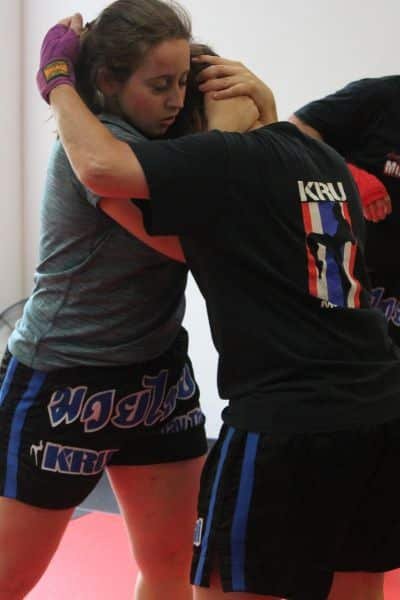
A beginner Muay Thai class follows a clear structure.
Warm-Up and Conditioning
Skipping rope, shadowboxing, and bodyweight work prepare your body and build the cardio base Muay Thai demands.
Technique and Pad Work
Coaches break down the jab, cross, teep (push kick), roundhouse kick, elbows, and knees. You then apply them on focus mitts and heavy bags, with correction along the way. New to wraps? Here’s how to wrap your hands.
What is Muay Thai Clinch, Sparring, and Progression
Clinch drills and partner work come next. Sparring is optional and introduced gradually, never on day one. At Evoke, progression is level-based, so you advance at your own pace with no fight-team pressure.
Common Muay Thai Terms: English and Thai
Walk into any Muay Thai gym and you’ll hear Thai words almost immediately. Learning a few helps you follow instructions, understand the culture, and show respect. Pronunciations below are approximate, and spellings vary between gyms.
Strikes and Techniques | what is Muay Thai
| English | Thai | Pronunciation |
|---|---|---|
| Punch | ชก | chok |
| Kick | เตะ | tay |
| Push kick | ถีบ | teep |
| Elbow | ศอก | sok |
| Knee | เข่า | khao (rhymes with “cow”) |
| Clinch | ปล้ำ | plam |
People, Places, and Tradition
| English | Thai | Pronunciation |
|---|---|---|
| Muay Thai (Thai boxing) | มวยไทย | moo-ay tie |
| Fighter or practitioner | นักมวย | nak moo-ay |
| Teacher or coach | ครู | kroo |
| Gym or training camp | ค่ายมวย | kai moo-ay |
| Ritual honouring teachers | ไหว้ครู | wai kroo |
| Pre-fight dance | รำมวย | ram moo-ay |
| Ring headband | มงคล | mong-kon |
| Armband | ประเจียด | pra-jiat |
Training Terms and Etiquette
| English | Thai | Pronunciation |
|---|---|---|
| Pad work | ตีเป้า | tee pao |
| Training or practice | ซ้อมมวย | som moo-ay |
| Hello | สวัสดี | sa-wat-dee |
| Thank you | ขอบคุณ | khop khun |
In Thai, politeness is marked with a closing word: ครับ (khrap) for men and ค่ะ (kha) for women. Saying “khop khun khrap” or “khop khun kha” to your coach after class is a small gesture that goes a long way. Curious how this compares to another art? See our guide to Korean terms for Hapkido moves. At Evoke, our Muay Thai coaches will help you pick these up naturally, one class at a time.

Benefits of Muay Thai for Beginners
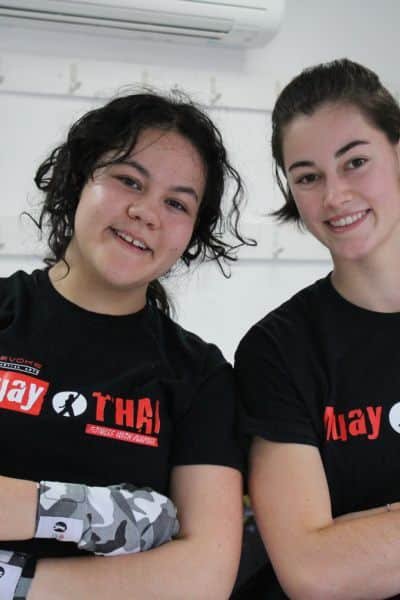
Because it uses the whole body, Muay Thai builds cardiovascular endurance, strength, balance, and flexibility together. Many people also find that stringing combinations together demands a focus that works as powerful stress relief. Learning real technique builds confidence that comes from competence, not just from finishing a hard workout. And you don’t need to be in shape to start. Training is what builds the fitness.
Is Muay Thai Right for You?
Yes, if you want a challenging workout, a genuine skill, and a supportive community. Our adult martial arts programs welcome every fitness level, and our teen program introduces younger athletes to striking fundamentals. Choosing a gym? See what Toronto Muay Thai gyms are really like, or check our FAQ.
Try Muay Thai in Midtown Toronto
Evoke has taught martial arts in Midtown Toronto for over 20 years, serving Leaside, Davisville Village, Mount Pleasant, and North Toronto. Our Muay Thai program is built for everyday adults: experienced coaches, level-based structure, and optional sparring. See what members say in our reviews, then book a trial class and experience it yourself.
Related Posts

Achieve a leaner, stronger, and more alive body while developing amazing self protection skills.
Achieve a leaner, stronger, and more alive body while developing amazing self defense skills.
"Training at Evoke has been a truly wonderful experience. As an adult engaging in martial arts for the first time, the environment has been ideal. All of the instructors have been motivating, knowledgeable, and supportive. The classes offer a great workout and a chance to feel a little bit badass. I look forward to continuing the journey!"
 Caitlin H.| Hapkido member